The Rise of Coworking Spaces in Nairobi
March 20, 2026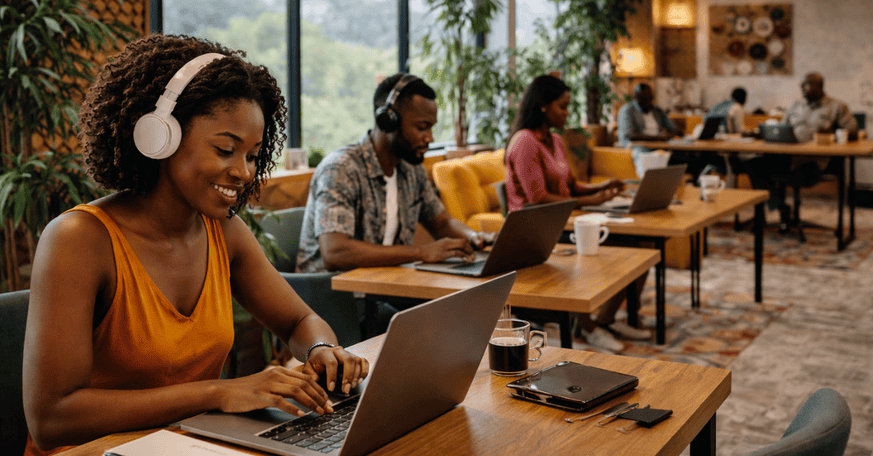
Remote work has become part of everyday business across the world, and Sub-Saharan Africa is no exception.
As connectivity improves and companies adopt more flexible ways of working, more professionals are no longer tied to a single office. Work is happening from home, from cafés, and increasingly from shared workspaces. While this brings freedom, it also comes with real challenges including infrastructure reliability, isolation, and limited access to professional work environments. For companies and professionals alike, creating the right conditions is essential to ensure productivity, collaboration, and well-being.
What Makes Remote Work Effective
One of the first realities to consider is infrastructure. Reliable internet and consistent power are still not guaranteed everywhere. For remote work to function smoothly, professionals often need backup solutions, whether that is a secondary internet connection, mobile hotspots, or alternative power sources. Without this, productivity can quickly be disrupted.
Equally important is communication. Remote teams depend on clear and consistent communication to stay aligned. Tools like Slack, Zoom, and Microsoft Teams have become essential, but tools alone are not enough. What matters is how they are used. Regular check-ins, clear expectations, and defined workflows help teams stay connected and accountable, even when they are working from different locations.
There is also the question of structure. Working remotely can blur the line between work and personal life. Without a clear routine, it becomes easy to lose focus or feel constantly switched on. Having set working hours, a defined daily rhythm, and a dedicated place to work can make a significant difference.
And then there is something we do not talk about enough. Human connection.
Working alone for long periods can feel isolating, especially for people who are used to being around others. Human interaction plays a big role in motivation, creativity, and overall well-being. Without it, even the most flexible setup can start to feel limiting.
Why Coworking Spaces Make a Difference for Remote Work
Across Africa, more professionals are turning to coworking spaces as a way to balance flexibility with structure. These environments offer the freedom of remote work, while still providing the conditions people need to stay productive and connected.
-
Reliable Infrastructure
Coworking spaces are designed to remove the common frustrations of remote work. High-speed internet, backup power, and fully equipped offices mean fewer interruptions and more consistent output.
-
A Space Designed for Work
There is a clear difference between working from home and working in a space built for productivity. Coworking environments help create focus. They allow people to step into work mode, without the distractions that often come with being at home.
-
Opportunity for Collaboration
One of the biggest advantages of coworking is being surrounded by other professionals. You might be working independently, but you are not working alone. Conversations happen naturally, ideas are shared, and opportunities often come from simply being in the same space.
-
Professional Community Building
Good coworking spaces go beyond desks and meeting rooms. They bring people together. Through events, workshops, and everyday interactions, professionals can build relationships that support both their work and their growth.
-
Better Balance and Well-Being
Having a place to go to work, while still maintaining flexibility, helps create balance. It separates work from home life and provides the social interaction that many remote workers miss.
The Future of Remote Work in Africa
Remote work is here to stay, but it is still evolving. As more businesses adopt flexible models, the need for reliable, structured, and connected work environments will only grow. Coworking spaces are playing an important role in this shift by offering a middle ground between working from home and committing to a traditional office.
At Nairobi Garage, this is something we see every day. Teams come in looking for flexibility, but they stay because of the environment. The energy, the community, and the ability to focus while still being connected to others.
Because in the end, remote work is not just about where you work. It is about how well you can do your work, and who you are connected to while doing it.
Cowork. Connect. Create.